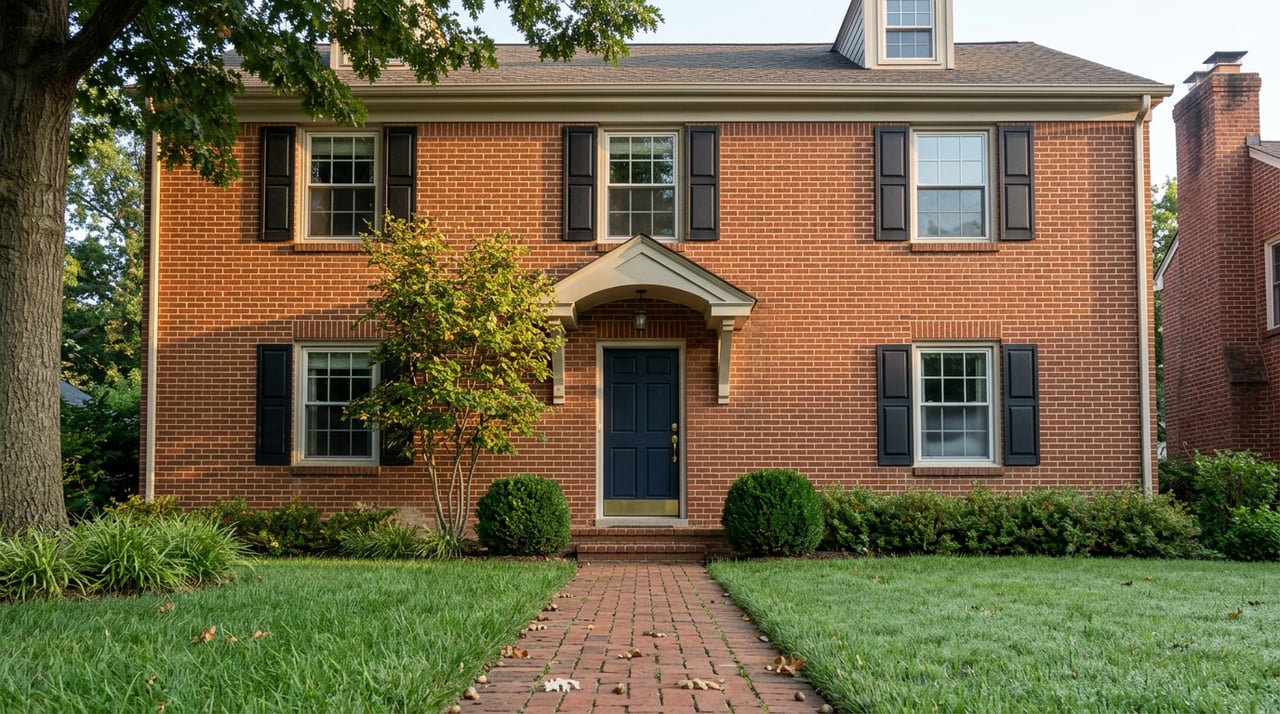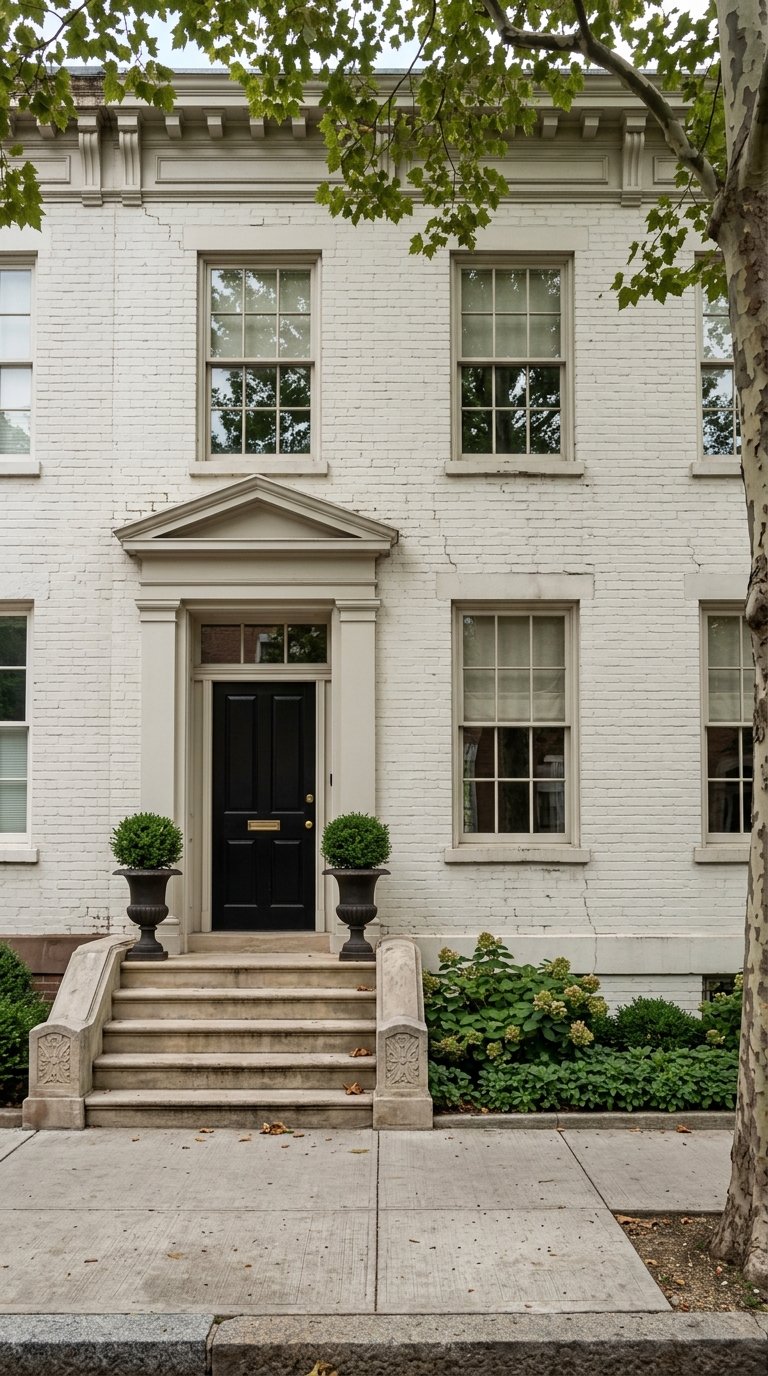
Few DC neighborhoods reward a walk the way Dupont Circle does. In just a few blocks, you can move from a formal memorial circle to ornate rowhouses, grand avenue mansions, active embassy buildings, and mixed-use corridors that show how the neighborhood evolved over time. If you want to understand why Dupont Circle feels so distinctive, this guide will help you read the architecture, spot the major historical layers, and follow a practical self-guided route. Let’s dive in.
Why Dupont Circle Stands Out
Dupont Circle is rooted in Pierre L'Enfant’s plan for Washington, but much of the neighborhood as you see it today took shape in the late 19th and early 20th centuries. According to the National Park Service’s overview of Dupont Circle, Connecticut Avenue was paved in 1872, elite construction followed soon after, the circle was renamed for Rear Admiral Samuel F. Dupont, and the present fountain was completed in 1921.
The area’s historic identity comes from its long period of development rather than a single building boom. The Dupont Circle Historic District record identifies a period of significance from 1875 to 1931, which helps explain why the neighborhood feels layered instead of uniform.
That same preservation record also points to 1931 as a turning point. As larger commercial development arrived near the circle, Dupont Circle shifted from a primarily elite residential address toward a more mixed-use district. Today, that mix is part of what makes the neighborhood so interesting on foot.
What Architecture You’ll See
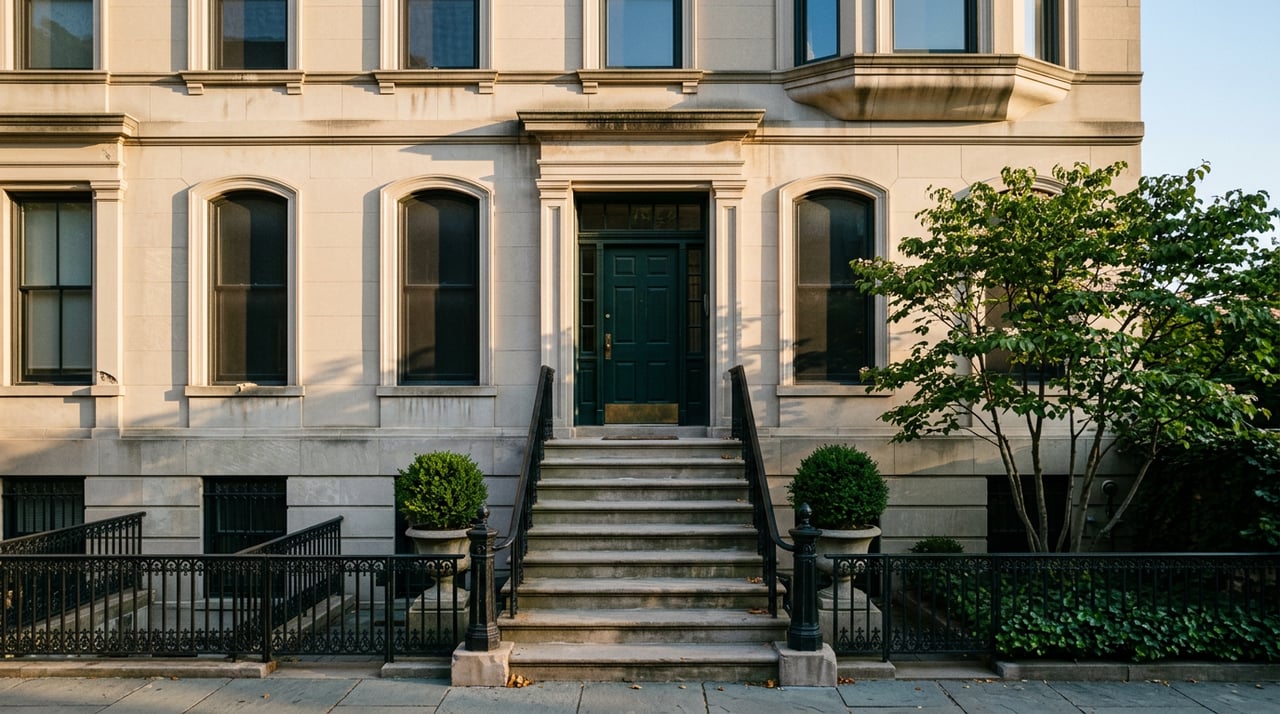
Dupont Circle is known for range and detail. DC planning materials describe the district as containing about 3,100 buildings dating from roughly 1875 to 1931, including Victorian rowhouses, large mansions, early apartment buildings, stables, carriage houses, and 1920s commercial structures.
As you walk, you’ll likely notice two clear patterns. Side streets tend to feature dense blocks of attached houses, while the major avenues open up to larger showpiece buildings. The historic district nomination notes that many of the avenue mansions survived largely intact in part because they were adapted for embassies, chanceries, clubs, and similar institutional uses.
That gives Dupont Circle a very different feel from neighborhoods that stayed purely residential. In Ward 2’s official profile, the city notes that many grand Victorian townhomes and stand-alone mansions in the area are occupied by foreign embassies and chanceries. In practical terms, you are walking through a neighborhood that is both historic and actively used.
A Self-Guided Walking Route
This is not an official trail. It is a compact loop built from documented landmarks that helps you see how Dupont Circle changes block by block.
Stop 1: Dupont Circle Fountain and Park
Start at the circle itself. This is the best place to frame the neighborhood’s civic and commemorative history, as well as its later role in the city’s social and community life.
The National Park Service describes Dupont Circle as the anchor of a neighborhood shaped by diplomats, government officials, war commemoration, and LGBTQ history. That broader context matters because the circle is not just a traffic feature. It is the center point for the neighborhood’s identity.
Stop 2: Patterson House
At 15 Dupont Circle, the Washington Club, also known as the Patterson House, gives you an immediate example of turn-of-the-century grandeur. This 1903 Neo-Classical house was designed by Stanford White of McKim, Mead & White.
The National Park Service asset record makes it easy to place the house in the neighborhood’s mansion era. It stands right at the circle’s edge, where architecture becomes a public statement.
Stop 3: Sulgrave Club
Next, head to 1801 Massachusetts Avenue NW. The Sulgrave Club was built in 1902 as the winter home of Herbert and Martha Wadsworth, and it is a strong example of the Beaux Arts influence in the neighborhood.
Today, the building also helps tell the story of reuse. As the Sulgrave Club’s history page shows, Dupont Circle’s large houses did not all remain private residences. Many found second lives that helped preserve them.
Stop 4: Anderson House
Continue along Massachusetts Avenue to 2118 Massachusetts Avenue NW. Completed in 1905 as the winter residence of Larz and Isabel Anderson, Anderson House is one of Dupont Circle’s signature Gilded Age landmarks.
The Society of the Cincinnati’s history of Anderson House identifies it as a Florentine-villa mansion, which adds another architectural layer to the route. If you are trying to understand why Massachusetts Avenue feels so ceremonial, this stop makes the point clearly.
Stop 5: Whittemore House
Turn toward 1526 New Hampshire Avenue NW for Whittemore House. Designed by Harvey Page and built between 1892 and 1894, it reflects the residential mansion layer that spread beyond the main circle.
Its later reuse as the headquarters of the Woman’s National Democratic Club shows another version of preservation through adaptation. The Whittemore House history helps connect the building’s original residential purpose with its ongoing public-facing role.
Stop 6: Elliott Coues House
For a smaller-scale contrast, make your way to 1726 N Street NW. The Elliott Coues House is a three-story townhouse and an important reminder that Dupont Circle’s architectural interest is not limited to the largest mansions.
The National Park Service page for the Elliott Coues House identifies it as a National Historic Landmark and notes that Coues lived there from 1887 to 1899. On a walk like this, stops like this one help you see the neighborhood’s finer-grained domestic fabric.
Optional Extension: Woodrow Wilson House
If you want to extend the route southward, head to 2340 S Street NW. The Woodrow Wilson House sits just beyond the immediate circle area and shows how the historic residential and diplomatic landscape continues outward.
The Woodrow Wilson House adds depth to the walk because it reinforces that Dupont Circle is part of a larger connected historic environment, not an isolated landmark cluster.
Embassy Landmark: Australia House
To reinforce the diplomatic side of the neighborhood, note the Embassy of Australia at 1601 Massachusetts Avenue NW. This is a useful visual stop because it reminds you that Massachusetts Avenue still functions as an active embassy corridor.
According to the Embassy of Australia, the site remains part of the area’s present-day diplomatic life. That active use is one reason Dupont Circle feels so different from a preserved district that exists mainly for tourism.
How to Read the Neighborhood
If you want to get more from the walk, pay attention to how the street pattern changes. Around the circle and along the major avenues, buildings often look larger, more formal, and more detached. On side streets, the scale tightens into attached houses with more repetitive rhythm and detail.
That pattern reflects the neighborhood’s historic development. The research record shows a layered mix of rowhouses, mansions, early apartment buildings, embassy and chancery reuse, clubs, museums, and mixed-use commercial buildings along the busier corridors.
Connecticut Avenue is especially useful to notice. It helps illustrate the shift from a more residential historic environment to a more commercial one, which lines up with the district’s 1931 transition toward mixed use.
Why Dupont Circle Still Feels Residential
One of the most common questions about Dupont Circle is whether it still reads as a neighborhood rather than just a destination. The answer is yes, but in a mixed way.
The preservation record makes clear that residential blocks remain a key part of the district, even as commercial buildings and institutional uses became more prominent over time. That contrast is part of the neighborhood’s character, and it is one reason a walking tour here feels especially rewarding.
For anyone thinking about housing in the broader DC market, Dupont Circle also offers a useful lesson in building types. The neighborhood’s historic stock is not one thing. It is a combination of narrow rowhouses, large mansions, converted institutional buildings, early apartments, and commercial corridors, all within a compact area.
What This Walk Tells You About DC Housing
Even if you are taking this route for fun, it also gives you a practical way to think about housing stock in older DC neighborhoods. Architecture often reveals how blocks function today, where residential use remains strongest, and how adaptive reuse shapes neighborhood character.
In Dupont Circle, the biggest takeaway is variety. You can see how historic preservation, diplomatic reuse, and mixed-use development all exist together. That is helpful context if you are comparing urban neighborhoods across DC and trying to understand why each one feels different on the ground.
If you are exploring neighborhoods across DC, Arlington, and the wider DMV, working with a local expert can help you connect the street-level feel of a place with real-world housing options and market strategy. If you want practical guidance on buying, selling, relocating, or investing in the area, connect with Bobby Pichtel.
FAQs
What makes Dupont Circle architecture so distinctive?
- Dupont Circle developed in multiple phases between 1875 and 1931, which left a mix of Victorian rowhouses, grand mansions, early apartments, and later commercial buildings.
Why are there so many embassies in Dupont Circle?
- Many of the neighborhood’s larger avenue mansions were later adapted for embassies, chanceries, clubs, and similar institutional uses, which also helped preserve them.
Is Dupont Circle still a residential neighborhood today?
- Yes. Dupont Circle still has important residential blocks, but it is also mixed-use, especially near major corridors like Connecticut Avenue.
Where should you start a Dupont Circle walking tour?
- Start at the Dupont Circle fountain and park so you can understand the neighborhood’s civic history before branching out to nearby mansion and townhouse streets.
What streets best show Dupont Circle’s historic character?
- Massachusetts Avenue, New Hampshire Avenue, N Street, and nearby side streets show the clearest contrast between grand mansions, townhouse blocks, and institutional reuse.